
Simple ways to return to the present through your senses and the life already around you
Jennifer Laptew Williams, LPC
When I think about Bali, I remember standing hand in hand with my mom during the water ceremony at Mama Ati’s Sanctuary. Sacred water flowed from pipes, and it was extremely cold and refreshing. The contrast between the air and the water was striking.
For me, the ceremony felt like a rebirth, a chance to let go of what we wanted to shed and welcome positive things into our lives, including abundance. I can still draw on that memory: my mother's hand in mine, the sensation of the water, and of course the sounds of the powerful chanting.
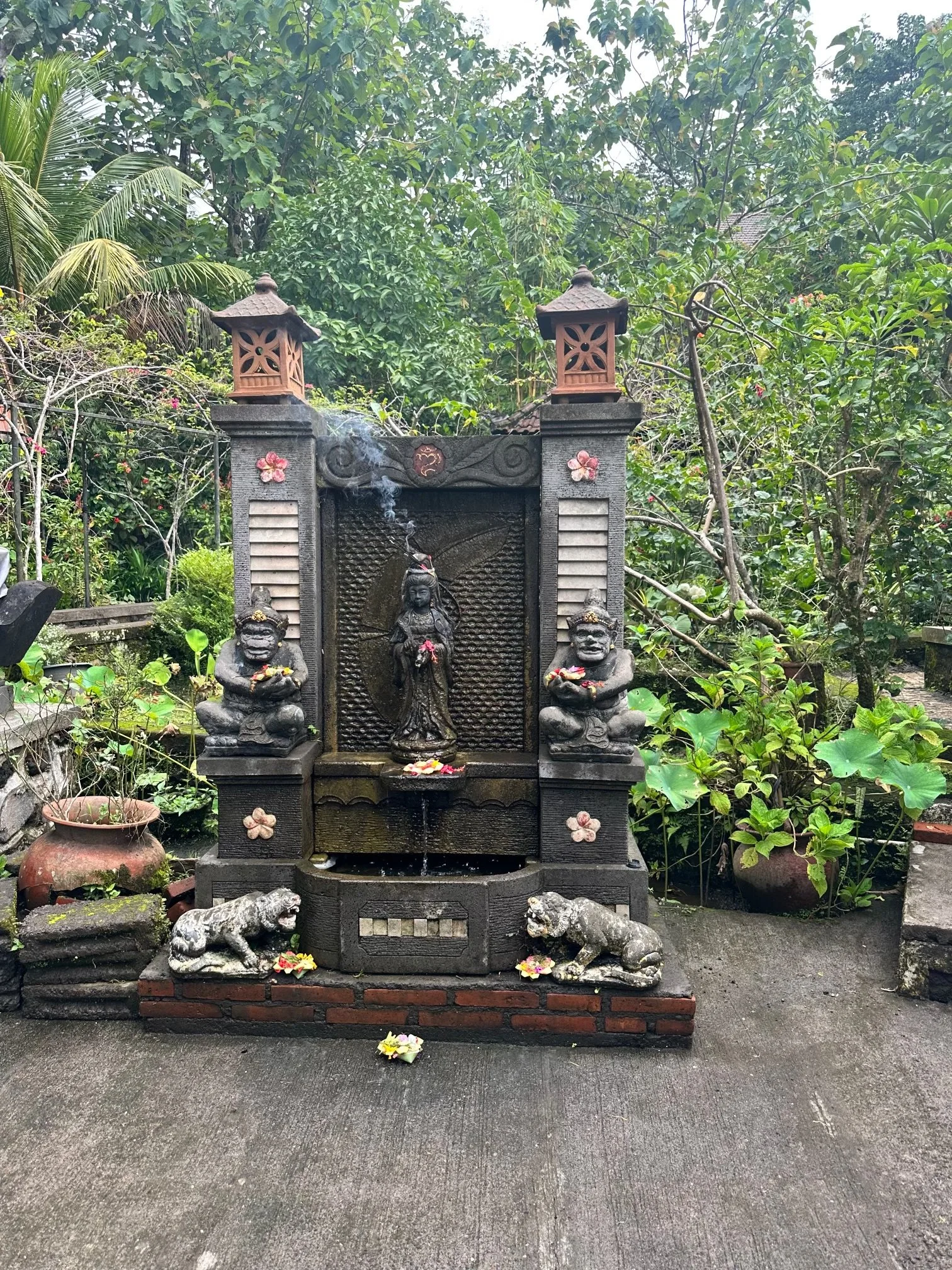
On the way to the water ceremony at Mama Ati’s sanctuary.
But the question I keep coming back to is how to bring that sense of presence into everyday life. What happens when we return home, where the responsibilities are waiting and the next thing on our list is already asking for our attention?
In my article about worry, love, and learning to let go in Bali, I shared how even an extraordinary experience with my mom could be accompanied by fear about losing her. Being somewhere beautiful did not make me immune to worry. And being a therapist certainly hasn't made me immune, either.
What Bali gave me was more to draw upon: images, sounds, shared experiences, and reminders of what matters to me.
You do not have to travel to Bali to try simple mindfulness exercises for anxiety. There are opportunities in the kitchen, at your desk, outside your front door, and in a conversation with someone you love. The challenge is noticing them while life is happening.
Key points
Begin with a few seconds during something you already do, such as washing your hands or making tea.
Notice one detail through your senses, then return to the conversation or task in front of you.
When worry takes over, ask whether there is a practical step you can take now.
Let your experience guide you. Adapt or stop an exercise that feels overwhelming, and seek support when you need it.
What everyday mindfulness can look like
Mindfulness involves bringing attention to the present moment with less judgment. That might mean noticing the warmth of a cup, recognizing that you feel worried, or realizing that you have been planning your response instead of listening.
You can practice while sitting quietly, but you can also practice while washing your hands or looking out a window. You do not need a blank mind, a particular spiritual belief, or a long stretch of uninterrupted time.
The National Center for Complementary and Integrative Health describes potential benefits of mindfulness-based approaches for some people experiencing anxiety and stress, while also noting limitations in the research. Studies of structured treatment programs should not be taken as proof that a brief exercise will produce the same results.
For everyday practice, I would begin with a smaller question: Can I notice what is happening right now, and choose where to place my attention next?
Sometimes you will feel calmer. Sometimes you will simply realize that you are tired, sad, hungry, or carrying too much. That information can help you decide what you need. A few moments of attention might lead you to rest, ask for help, or address something you have been putting off.
Mindfulness exercises for anxiety: Start with your senses.
Grounding through the five senses is something I have taught clients for a long time, well before my trip to Bali. It gives us a concrete way to reconnect with our surroundings when our attention has become caught in worry.
Mindfulness and grounding overlap, but they have different emphases. Mindfulness can include noticing thoughts and emotions. Sensory grounding directs attention toward what you can perceive around you in the present.
One familiar approach is the five-four-three-two-one exercise, described in NHS guidance on grounding: notice five things you see, four you feel, three you hear, two you smell, and one you taste.
You might notice light on a wall, the texture of your sleeve, and a sound coming from another room. Describe an actual detail: the fabric feels smooth against your fingers, or the light creates a narrow rectangle across the floor. There is no need to find something beautiful. An ordinary detail is enough.
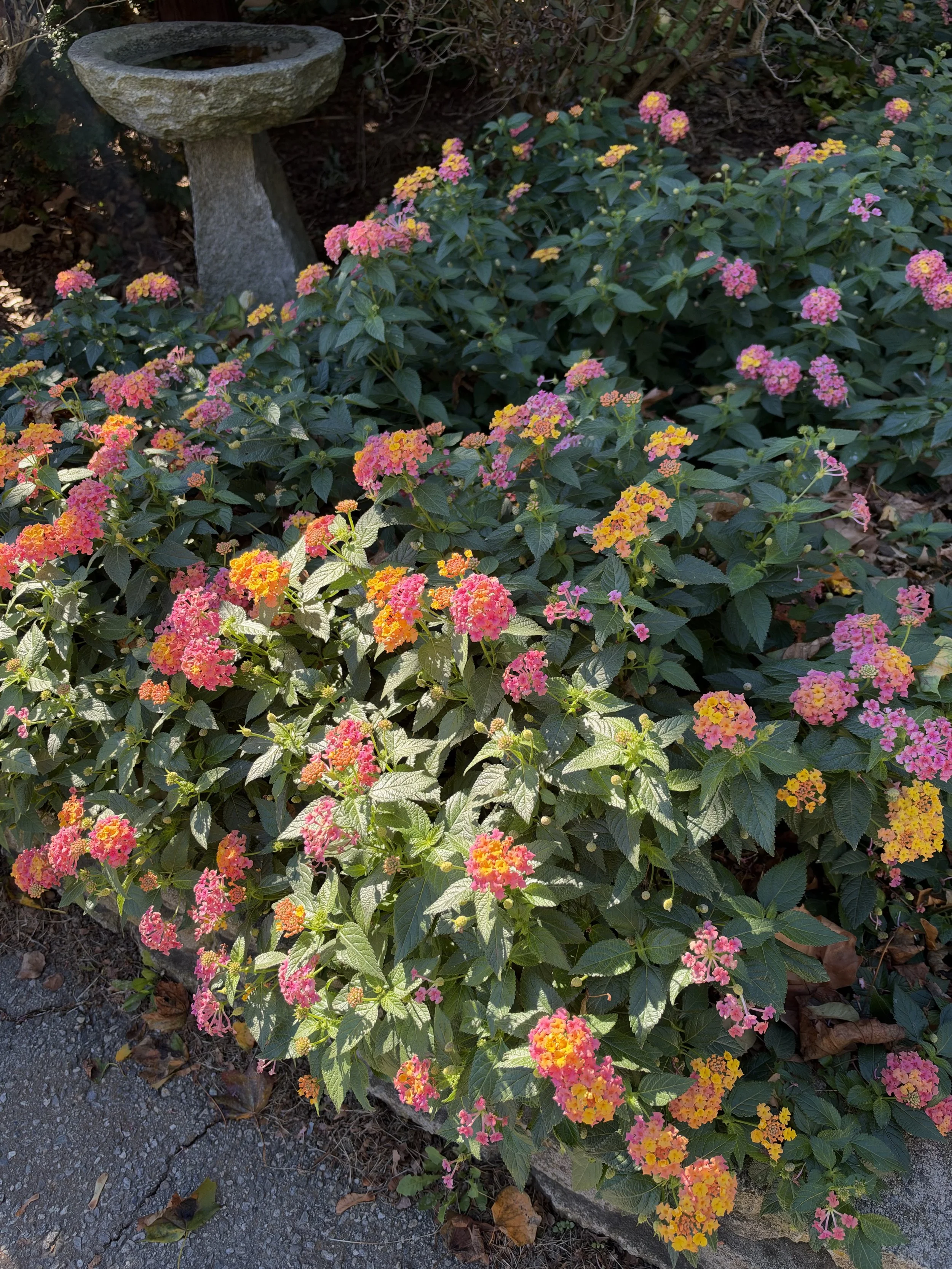
Color and texture in the garden.
Adapt the exercise to the senses available and comfortable for you. You can skip a sense or spend the whole time with one object. If counting becomes another task to get right, simplify it. Notice one thing you can see and one point of contact, such as your feet resting on the floor.
Then ask yourself where you want to direct your attention next. Perhaps it is back to a conversation, the email you were writing, or making lunch. This final step helps connect the exercise to the life you are trying to participate in.
Choose a safe moment for focused exercises. Keep your attention on driving or other activities that require it, and save the practice for when you have stopped.
Let a familiar routine become your reminder
When you are already stretched thin, adding a daily mindfulness assignment can feel like one more responsibility. It may be easier to begin with something you already do.
Choose one ordinary activity and give a small part of it your attention.
If you make coffee or tea, notice the cup in your hand and the first sip before looking at your phone. If food or drink is not a comfortable focus, try washing your hands. Notice the temperature of the water and the feeling of the towel. At your desk, look away from the screen and notice the room before starting your next task.
You can also use the transition between activities. After closing your laptop, pause before moving on. Notice what you are carrying from the workday. Is there a task that needs to be written down so you can return to it tomorrow? Is there tension in your shoulders? Would a few moments of stretching feel helpful?
There is no need to build an elaborate ritual. A practical starting point might be, “When I wash my hands after arriving home, I will notice the water for a few seconds.”
Make the plan small enough to fit the day you actually have. If your mind is already on dinner, let that be something you notice rather than a reason to criticize yourself. Over time, you can decide whether that particular reminder is useful. If it keeps disappearing into the rush, choose a different moment. The practice should be workable for you.
Find something to notice close to home
At home, I often practice mindfulness while walking. On a fall walk with my puppy, Benji, I was reminded to slow down and notice the little things. I try to feel the ground beneath my feet and notice how each step feels inside my shoes against the pavement. My favorite, though, is the feeling of bare feet on grass.
Recently, I was feeling particularly frazzled and emotional. Having a moment, you could say. I went outside, took off my shoes, and sat in the grass.
I paid attention to that carpet of grass beneath me. I found myself thinking that nothing man-made could quite replace the feeling of natural grass against my skin. I felt grateful to be there, surrounded by leaves, noticing their shape, size, color, and texture.
The experience brought me into the moment and also reminded me of being a child in the fall, enjoying the leaves and never thinking twice about rolling around in them.
These days, I usually think twice because of ticks! But my mind didn't go there in that moment.
What stayed with me was how much there was to experience right where I was. I had not arranged a retreat or made a special trip. I had stepped outside and paid attention.

A fall walk with my puppy, Benji, reminding me to slow down and notice the little things.
Your version may look different. You can keep your shoes on and take sensible outdoor precautions. Notice the rhythm of your steps, the support beneath your feet, or the shape of a leaf. There is no need to be barefoot for this to be a meaningful practice.
Here in Connecticut, changing seasons offer plenty to notice: bare branches, sunlight on a cold afternoon, or water moving along the shoreline. Familiar surroundings can fade into the background until we give ourselves a reason to look again.
You do not need a scenic walk or access to the beach. A window is enough. You might notice how the light has changed since morning or follow the movement of a branch for a few moments. Indoors, a plant, a familiar photograph, or the pattern on a piece of fabric can offer something concrete to observe.
Try describing what you see before deciding how you feel about it. “The sky is pale gray” gives you a different point of attention from “What a miserable day.” You may still dislike the weather. You have simply taken a moment to notice what is there.
If going outside is pleasant and accessible, bring the same attention to a short stretch of your usual route. Stay aware of your surroundings. When your mind wanders to tomorrow, gently return to what is in front of you.
Draw on a meaningful memory and return to where you are
Since Bali, I have more images and experiences to draw upon when I notice myself getting pulled into worry. I think about holding hands with my mom during the water ceremony, our embrace near the volcano, the natural surroundings, and the singing and mantras we experienced.
Those memories can help me reconnect with what I describe as coming home to my heart: a sense of peace and love.
It is not perfect, but it does help.
When fear about the future becomes consuming, remembering one of those moments can help me shift my attention toward the love we have shared. The fear may still be there. I can acknowledge it while also allowing myself to remember something meaningful.
Recalling a memory is a form of imagery, rather than the same thing as noticing your current surroundings. I think it is helpful to make that distinction. A comforting memory can be a starting point, followed by a return to the room you are in and the people or activities in front of you.
If you would like to try this, choose a memory that feels comforting or steady enough today. It could be a conversation, a moment with a pet, or a place where you felt at ease. Notice one detail, then look around your current surroundings. What would help you participate in this moment of your life?
There is no need to force a positive feeling. A loving memory may also bring sadness, especially when grief is involved. If the exercise makes you feel more overwhelmed or distant from the present, set it aside and choose something neutral to look at or touch instead.
Notice when planning turns into worry
Planning is part of caring for our lives. There are appointments to make, decisions to consider, and real problems that deserve attention. Mindfulness does not ask us to ignore those responsibilities.
It can help us notice when we have moved from useful planning into repeatedly imagining what might go wrong.
You might begin by gently naming what is happening: “I am worrying about tomorrow,” or “I am replaying that conversation.” You do not have to argue with every thought or determine immediately whether it is true.
Then ask a practical question: Is there something I can do about this now?
If the answer is yes, identify a manageable next step. Write down the question you need to ask, schedule the appointment, or set aside time to work through the problem. Once you have made a plan, return to what you are doing.
If the answer is no, notice one detail around you and decide what deserves your attention for the next few minutes. Perhaps you want to finish eating, listen to someone, or get ready for bed.
The thought may return. That does not mean the practice has failed. You can recognize it again without turning the exercise into a battle to make it disappear. If you find yourself repeating grounding or reassurance until everything feels exactly right, consider discussing that pattern with a therapist rather than adding more repetitions.
Practice presence with someone you care about
One of the most meaningful parts of Bali was sharing it with my mom. That is also why fear could find its way into those moments. When someone matters deeply to us, our minds can move quickly from appreciating their presence to imagining their absence.
I know that experience well.
An everyday opportunity for mindfulness may be the next conversation you have with someone you love. Put your phone aside, if you can. Listen to what they are saying. Notice their voice and give yourself a chance to hear the answer before deciding what you will say next.
You might ask a question because you are curious, rather than trying to move efficiently through an update. What made them laugh today? What has been on their mind?
If worry interrupts, acknowledge it gently and return to their words. You do not have to make the interaction unforgettable or turn it into a perfect memory. Putting that pressure on every moment can make it harder to enjoy the person who is already there.
Presence can be very ordinary. It can be listening without multitasking, allowing a quiet moment, or sharing a meal without rushing to the next thing.
There is room for this kind of attention even when the relationship, the conversation, or the day is imperfect.
When mindfulness feels uncomfortable
Some people notice more anxiety when they become quiet, close their eyes, or focus closely on breathing or body sensations. This deserves attention, particularly if there is a history of trauma, panic, or feeling disconnected from the present.
The NCCIH overview of mindfulness and meditation notes that negative experiences can occur and that safety research remains limited. It is reasonable to adapt or stop a practice that is making things worse.
You can keep your eyes open. Choose a neutral object in the room instead of an internal sensation. Try a small movement or brief walk if that feels more manageable than sitting still. Breathe normally rather than forcing deep breaths or holding your breath.
If you begin to feel overwhelmed, stop the exercise and reconnect with your surroundings or a supportive person. Persistent distress is a reason to seek individualized help, rather than push yourself through a longer practice.
There is also an important difference between noticing discomfort in a safe setting and remaining in a situation where you are being harmed. You are allowed to leave, set a boundary, address a practical problem, or ask for support. Mindfulness should never become a reason to tolerate mistreatment or disregard your needs.
How mindfulness can fit alongside anxiety therapy
Small practices can be useful, but you do not have to manage persistent anxiety or trauma symptoms with self-help alone. If worry is affecting your sleep, work, relationships, or ability to enjoy your life, therapy can help you understand what is happening and consider treatment options.
Cognitive behavioral therapy, or CBT, can help people examine the relationships among thoughts, feelings, and behaviors and work on patterns that are causing difficulties. The National Institute of Mental Health's overview of psychotherapy explains how these approaches can be tailored to a person's needs. Mindfulness may help you notice a pattern; therapy can help you decide how to work with it.
In my practice, I also use Accelerated Resolution Therapy, or ART, which involves therapist-guided eye movements and imagery to work with distressing experiences. A 2024 systematic review of ART for adults with PTSD found promising results while emphasizing the need for more high-quality research. That evidence does not establish that ART is the right treatment for everyone experiencing anxiety.
The everyday exercises in this article are separate from ART treatment. A comforting visualization at home is not an ART session, and you do not need to revisit traumatic memories on your own to practice mindfulness.
If you are considering anxiety therapy in Connecticut, I invite you to learn more about my work at Hope & Healing Professional Counseling in Groton and reach out to discuss what you are looking for.
Choose one small place to begin
You do not need to try every idea in this article. Choose one that feels comfortable and practical enough for tomorrow.
Perhaps it is noticing the water while you wash your hands. Perhaps it is looking out the window before opening your inbox or listening more fully during a conversation. Give yourself permission to begin with a few seconds.
Afterward, ask what you noticed. Were you able to return to something you wanted to do? Did you recognize a need you had been overlooking? Did the exercise feel helpful, neutral, or uncomfortable? Use that information to adjust, rather than giving yourself a grade.
There will be days when you forget. You can begin again at the next ordinary opportunity.
Bali will always hold a special place in my heart. I am grateful for the experiences I shared with my mom and for the memories I can continue to draw upon.
But there is also a life here, at home, that deserves my attention. There are people to listen to, small details to notice, and moments I would like to be present for while they are happening.

Golden light across the water in Groton, CT
Perhaps one of those moments is already waiting for you today.
Suggested reading
Meditation and Mindfulness: Effectiveness and Safety. National Center for Complementary and Integrative Health. A useful overview of mindfulness research, possible benefits, and safety considerations.
Psychotherapies. National Institute of Mental Health. An introduction to therapy approaches, including CBT, and questions to ask when choosing a therapist.
Accelerated Resolution Therapy (ART) for the treatment of posttraumatic stress disorder in adults: A systematic review. Storey, Marriott, and Rash, PLOS Mental Health, 2024. For readers interested in the research behind the ART discussion, this review explains both promising findings and limits in the evidence.
Jennifer Laptew Williams, LPC, is an Advanced Certified Accelerated Resolution Therapist and the founder of Hope & Healing Professional Counseling, LLC, in Groton, Connecticut.
This article offers general education and reflection. It is not a substitute for individualized mental health care.