

I do not believe that the amount of time someone has suffered should determine how long they must wait to feel better.
That belief is at the heart of why Accelerated Resolution Therapy, or ART, has become the primary focus of my practice. I want people to know that meaningful change may be possible sooner than they expect. Therapy does not always have to continue for months or years before someone experiences a benefit.
Before training in ART, my work centered on cognitive behavioral therapy, cognitive processing therapy, and solution-focused therapy. After experiencing ART myself and seeing the changes it made possible in my clinical work, I shifted to a predominantly ART-based practice. I pursued advanced training and became an assistant to ART founder Laney Rosenzweig in her professional trainings for other therapists.
This was not simply another technique to add to my list. It changed the way I wanted to practice and what I wanted more people to know about healing.
The short version
ART became central to my work because of the changes I experienced personally, the meaningful changes I observed in my clinical work, and its potential to reduce distress in a brief course of treatment. It does not mean that every person will respond in the same way, or that research has established ART as superior to every other therapy.
Key points
My background in CBT still informs my work, even though ART is now my primary approach.
ART works with distressing imagery, memories, emotions, and physical sensations through a structured therapeutic process.
ART is commonly described as a one-to-five-session treatment for a targeted concern. That is not a guarantee or a deadline for healing.
You deserve a clear explanation of the treatment, its evidence, and how progress will be evaluated.
What I brought with me from CBT
Cognitive behavioral therapy, or CBT, gave me a practical way to help people examine connections among thoughts, emotions, and behaviors. It is not simply positive thinking. CBT can include testing interpretations, changing avoidance patterns, practicing new behaviors, and developing ways to respond to distress. The American Psychological Association describes it as a collaborative approach supported by substantial research.
That background remains important to me. A person can benefit from recognizing an unhelpful pattern without being told that her feelings are wrong. She can learn to question a frightening conclusion without dismissing the circumstances that made it feel convincing.
For example, there is a difference between feeling anxious about an uncertain situation and knowing that something terrible will happen. Recognizing that difference can create room for a more informed response. I explored that distinction in my article, When You Keep Waiting for the Other Shoe to Drop.
My transition toward ART did not require me to erase what I had learned. It required me to pay attention to what I was seeing in practice and to be willing to change the emphasis of my work.
I still value understanding. I also want to know whether the distress itself is changing. Can you approach a situation differently? Can you think about something painful without the same overwhelming reaction? Is your daily life becoming less organized around avoiding that feeling?
Those are the kinds of questions that matter to me when we talk about progress.
Why ART became the center of my practice
My belief in ART is not based only on what I have seen as a therapist. It is also personal.
Before ART, I couldn’t talk about what happened to me, or even be reminded of it, without breaking down into uncontrollable sobbing. I would struggle to get my words out or even gather my thoughts. And then there were the hives. Everyone could see them, and I could feel them. It was embarrassing and so disruptive. I felt like I was burning from the inside out.
Even after my first ART session, I noticed a significant shift. After two sessions, I could think about those experiences without the same distress and bring to mind positive images I had chosen instead, accompanied by neutral or positive sensations.
That experience changed me personally and professionally. After my basic ART training, I began to see a different possibility for healing, and it ultimately led me to change the way I practice.
Seeing meaningful changes in my clinical work reinforced that decision. I did not want ART to remain an occasional option when I felt it could offer something important to the people seeking my help.
I pursued advanced certification and continued learning. Assisting Laney Rosenzweig in trainings also became part of that commitment. Helping other therapists learn about an approach I believe in matters to me because awareness does not end at the door of my own office.
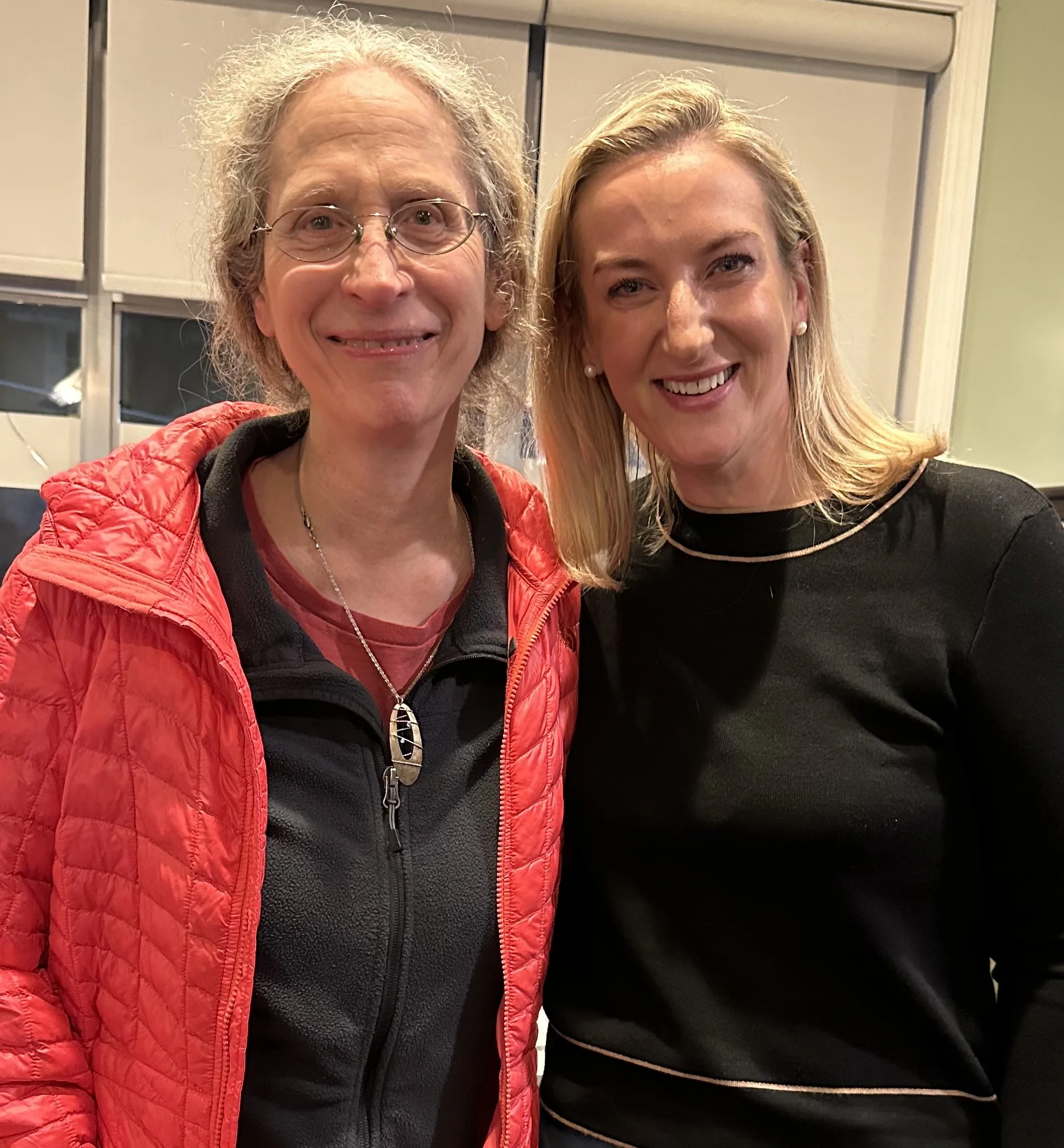
I am passionate about this work. I want that to come through honestly, rather than presenting ART as one more interchangeable item on a long menu of services.
At the same time, the person in front of me is more important than my enthusiasm for any treatment. You should not feel that you have to share my confidence before we begin. You can bring questions. You can be skeptical. You can want to understand what makes this different from something you have already tried.
My job is to explain why I think an approach may fit your concerns and to pay attention to what actually happens as we work together. A strong belief in a therapy should make a clinician more invested in thoughtful care, not less open to a person's individual experience.
When understanding is not the same as feeling relief

You may be able to explain why a particular situation affects you and still dread the next time it happens. You might recognize that a memory belongs to the past while noticing tension or distress when something reminds you of it.
That does not make the understanding useless. It also does not mean you have failed to apply what you learned.
One reason ART resonates with me is its attention to the experience as a whole. I am interested in what you think, but also in what you feel and what you notice physically. I do not want the conversation to stop at finding a more reasonable sentence if your mind and body still cannot settle.
This is not a claim that CBT ignores the body. CBT can address physical reactions and behaviors, too. The distinction I am describing is the emphasis of my own practice and the structured way ART lets me work with distressing experiences.
For me, healing needs to mean something beyond being able to describe the problem beautifully. I want to help you move toward a life in which the problem takes up less space.
That may mean less time anticipating a trigger, more freedom to make a choice, or greater ease in an ordinary moment that used to feel difficult. We need to define that in your language, not only in clinical terms.
What happens in Accelerated Resolution Therapy
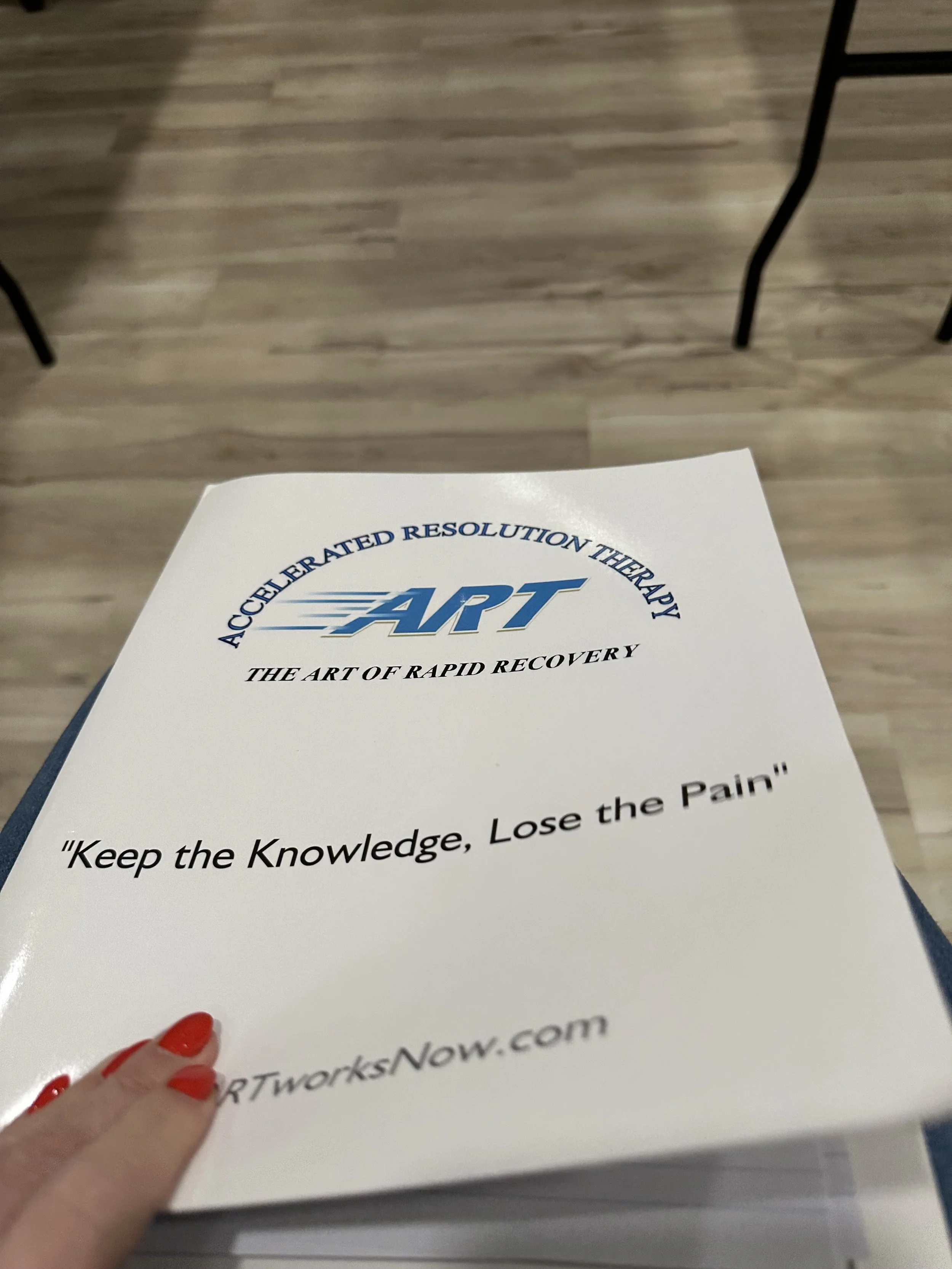
ART is a structured psychotherapy that combines therapist-guided eye movements with attention to distressing memories or imagery, emotions, and body sensations. It includes a process in which the client develops preferred imagery rather than remaining with distressing images in the same way. The goal is to reduce the distress associated with the experience, not to pretend that the event never happened.
You do not have to verbally describe every detail of a painful event to participate in ART. That feature can be important for someone who wants help but feels reluctant to tell the whole story aloud. Learn more about the ART process.
Before starting, we discuss your concerns, goals, and whether this approach is appropriate. I want you to understand what we are doing and to know that you can ask questions or request a pause.
ART is not a promise that nothing uncomfortable will come up. Its informed-consent materials explain that strong emotions, physical sensations, or additional distressing memories may arise during or after treatment. Discussing those possibilities is part of preparing for care, rather than something to leave until afterward.
I also want to be careful with popular explanations about the brain. ART's proposed mechanisms are still being studied. We do not need to claim that every step of the neuroscience is settled in order to take the treatment's potential seriously.
Why a brief course of ART matters to me
ART is commonly described as a brief treatment delivered in approximately one to five sessions. Early published research in adults with PTSD symptoms used that treatment range. Some people report improvement after a single session, but a targeted problem and a person's overall mental health needs are not necessarily the same thing.
For someone who has already spent years struggling, the possibility of meaningful relief in a short time matters. It deserves to be part of the conversation about treatment options.
I do not want people to assume that a painful experience must be worked on for years simply because its effects have lasted for years. I also do not want a person who needs additional care to feel that she missed a deadline.
A brief framework gives us a reason to be focused and to evaluate change. It does not give us permission to rush preparation, overlook other needs, or announce success before you experience it in your own life.
We can identify what we are targeting and return to it as treatment progresses. Has the intensity changed? Does it interrupt you less often? Are you able to do something you were avoiding? What still needs attention?
If treatment is not helping, I want that discussed openly. You should not have to protect a therapist's enthusiasm by pretending to feel better. What you are experiencing helps us decide together what you need next.
How ART fits alongside medication
ART is psychotherapy, not a medication. The process does not require a medication to take effect before the therapeutic work can occur.
That is meaningful to people who are curious about a nonmedication approach. It is also important to be clear about what that does not mean. Choosing ART does not automatically mean that someone should stop medication or that medication has no place in her care.
I do not want anyone to hear a message of hope as criticism of a treatment that has helped them. Medication questions belong with the prescribing professional, and changes should be discussed with that person.
My interest is in helping you understand your options, not in asking you to choose an identity as someone who does or does not use medication. The care you receive should reflect your individual needs.
What the research says about ART
ART changed how I practice, but my experience is only one part of the picture.
A systematic review published in PLOS Mental Health found promising results for adults with PTSD symptoms. The studies differed in how they were conducted, and the authors emphasized the need for more high-quality research before drawing firmer conclusions.
I’m encouraged by what we know so far, and I’m always happy to talk about what we’re still learning.
Why I want more people to know about ART
I believe ART has the potential to change the way we think about healing. I have seen people make meaningful progress in a surprisingly short time, and I want more people to know that suffering does not have to be something they simply learn to live with.
My hope is that, as awareness and access grow, more people and communities will have the opportunity to heal.
Access also requires more than awareness. People need trained providers, understandable information, and care they can realistically arrange and afford. A shorter course may reduce some practical burdens, but it does not make those barriers disappear.
This is one reason I keep writing about ART. Someone cannot ask about a treatment they have never heard of. A thoughtful introduction can open a conversation that might otherwise never happen.
What I want you to ask before beginning
If you are considering ART, you do not need to arrive with a complete explanation of your history. It is useful to arrive with questions about the care itself.
You might ask what makes ART a reasonable option for your concerns, what other approaches are available, and what your therapist's training includes. Ask what preparation is needed and how you will evaluate whether treatment is helping. Ask what happens if a session brings up something difficult or if you do not notice the change you hoped for.
If you have questions about cost, scheduling, or what happens between sessions, we can talk through those before you decide whether to get started.
Exploring ART in Groton and across Connecticut
In my Groton, Connecticut practice, ART is central to how I work with people seeking help with trauma and anxiety. My broader clinical experience also includes maternal mental health, depression, grief, and loss. An individual assessment helps us decide what approach fits the concern you want to address.
I offer in-person appointments and virtual care for clients located in Connecticut or Vermont when appropriate. I prefer the first ART session to be in person. You can read more about anxiety therapy in Connecticut on my website or start by requesting a free 15-minute phone consultation.
You do not have to be certain that ART is the answer before asking about it. You also do not have to decide that everything you have tried before was a waste. Previous work can matter, and there may still be room for a different approach.

What I want you to leave with is this: the length of your suffering is not a sentence for your future. Meaningful change may be possible, and you deserve the opportunity to explore it with clear information and thoughtful care.
I believe deeply in that possibility. It is why I changed my practice, why I continue this work, and why I want more people to know about ART.
This article provides general information and does not replace individualized mental health assessment or treatment.
Sources and suggested reading
American Psychological Association. What Is Cognitive Behavioral Therapy?
Jennifer Laptew Williams. When You Keep Waiting for the Other Shoe to Drop.
Rosenzweig Center for Rapid Recovery. What Is ART? Treatment description from the ART training organization.
Rosenzweig Center for Rapid Recovery. ART Acknowledgement and Informed Consent Agreement.
Kip and colleagues. Brief Treatment of Symptoms of Post-Traumatic Stress Disorder by Use of Accelerated Resolution Therapy. Behavioral Sciences, 2012.
Storey, Marriott, and Rash. Accelerated Resolution Therapy for the treatment of posttraumatic stress disorder in adults: A systematic review. PLOS Mental Health, 2024.
Hope & Healing. Anxiety Therapy in Connecticut and Contact.